
Bend, OR Siding Contractor
Expert Siding Installation in Bend, Oregon
- Expert Siding Installation & Repair
- Energy-Saving Siding Solutions
- James Hardie Certified Contractor
Our Simple Siding Installation
Process

Schedule a
Consultation
Get answers to your siding challenges with an on-site consultation. We’ll inspect your exterior and provide an accurate, customized quote.

Design Your
Home Exterior
From material selection to color consultation and timeline planning, we keep open, clear communication so we can meet all your expectations and budget.

Enjoy Your
Home Again
Truly relax in your home again, knowing your home exterior was installed properly and will protect your home for decades to come.
Expert Siding Installation in Bend, Oregon
Siding in Bend faces a completely different set of challenges than anywhere on the west side of the Cascades. At 3,600 feet elevation in the high desert, Bend receives only about 12 inches of annual precipitation, so moisture is rarely the primary enemy. Instead, the relentless forces working against your siding here are intense UV radiation from 200-plus sunny days per year, extreme temperature swings that can range from below zero in January to over 100 degrees in July, and freeze-thaw cycles that test every joint and fastener on your exterior. Lifetime Exteriors understands that Bend siding is a fundamentally different discipline from western Oregon siding, and we bring that specific knowledge to every project we take on in Deschutes County.
Bend’s housing stock is as diverse as its landscape. Old Bend, the walkable core near Drake Park and Mirror Pond, has charming 1920s and 1930s bungalows with original wood siding that has been baked by decades of high-altitude sun. NorthWest Crossing and Broken Top represent Bend’s modern planned-community era, with homes clad in a mix of fiber cement, engineered wood, and natural stone that reflects the mountain contemporary aesthetic this town is known for. Out in Mountain View and Three Pines, sprawling properties sit on larger lots surrounded by ponderosa pine and juniper, where wildfire preparedness has made non-combustible siding a serious consideration. Whatever your Bend home looks like and wherever it sits, Lifetime Exteriors delivers siding solutions engineered for the high desert.
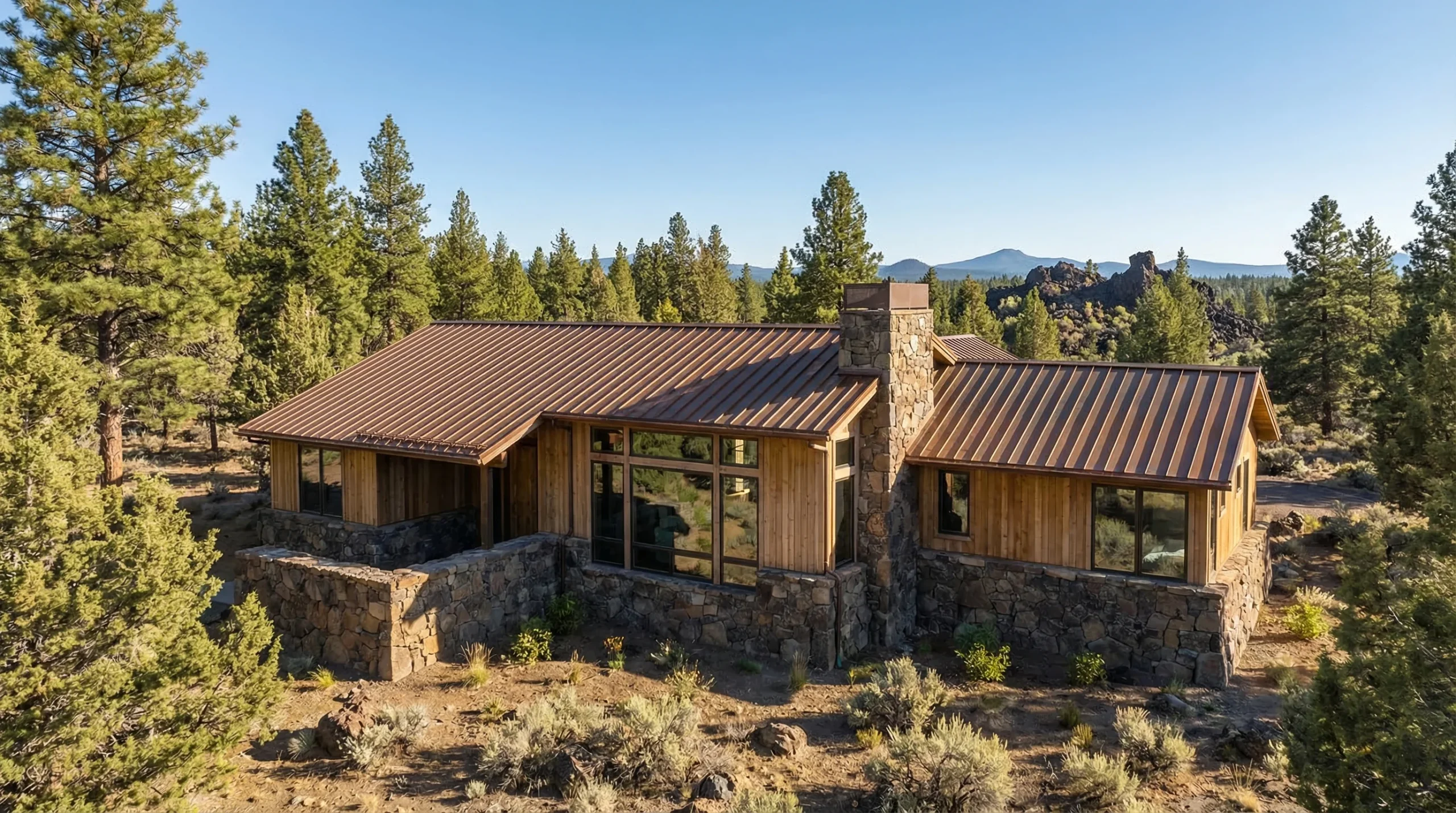
Siding Services for Bend Homes
Siding Installation
A siding installation in Bend requires a fundamentally different approach than what we execute on the wet side of the mountains. While western Oregon installations focus heavily on moisture management, Bend installations must account for thermal movement caused by the dramatic daily and seasonal temperature swings this high desert climate produces. Materials expand and contract significantly when temperatures shift 50 or 60 degrees between a sunny afternoon and a sub-freezing night, and every fastener, joint, and caulk bead must accommodate that movement without cracking or pulling loose. Our Bend installations use high-temperature-rated sealants, appropriately spaced fastener patterns that allow for expansion, and trim details that provide room for seasonal material movement. We also pay close attention to UV exposure on south- and west-facing walls, where intense high-altitude sun can degrade lesser products in a fraction of the time they would last in Portland.
Siding Repair
Bend’s climate creates siding failure patterns that are distinct from the rot and mold we see in the Willamette Valley. Here, the most common issues are sun-bleached and chalking paint finishes, caulk joints that have cracked open from thermal cycling, and fastener pops where screws or nails have worked loose as the siding expands and contracts across hundreds of freeze-thaw cycles. Wood siding in Bend also develops deep checking and splitting from UV exposure rather than the soft, punky rot characteristic of wet-side homes. We repair these high-desert-specific failures with appropriate materials and techniques, including UV-resistant caulks, stainless steel fasteners that resist the corrosion caused by Bend’s alkaline volcanic soil, and finishes rated for high-UV environments.
Siding Materials
For Bend’s extreme conditions, James Hardie fiber cement siding is our primary recommendation, and not for the same reasons we recommend it in Portland. In western Oregon, fiber cement wins because it resists moisture. In Bend, it wins because it handles UV exposure and thermal cycling better than any other mainstream siding product. The material does not swell, check, or split from sun exposure the way wood does, and it does not become brittle in extreme cold like vinyl. We install the ColorPlus factory-finish option for most Bend projects because the baked-on coating provides significantly better UV resistance and color retention than field-applied paint, which is critical when your south-facing walls see 300-plus days of direct sunlight at altitude. For Bend homes in the wildland-urban interface around Shevlin Park, Three Pines, and the west side, fiber cement also carries a Class A fire rating that can be a factor in insurance rates and Firewise community compliance.
Repair or update your
Single-Family Home, Townhome, Condo, Multi-family Home, Or Commercial Property
Serving Bend Neighborhoods
Old Bend, the historic core along the Deschutes River, is where we encounter Bend’s most character-rich homes: Craftsman bungalows and simple frame houses from the 1920s through 1940s with original wood siding that has been exposed to nearly a century of high-desert sun. These homes often need complete re-siding combined with sheathing upgrades, and homeowners here care about preserving the historic character of the neighborhood. NorthWest Crossing, one of Central Oregon’s premier planned communities, features modern mountain contemporary architecture where homeowners want siding that matches the clean, sophisticated aesthetic of the development. Broken Top, adjacent to the golf course and backed against the Cascade foothills, has larger custom homes with complex facades that combine multiple siding materials, stone veneer, and exposed timber elements. Mountain View and Three Pines sit on Bend’s east side in more open, arid terrain where homes face maximum sun exposure and minimal tree shelter. Shevlin Park homes on the west side live in the ponderosa pine forest at the wildland-urban interface, where fire-resistant siding is not just a preference but a community priority.
Neighborhoods We Serve:
Old Bend NorthWest Crossing Broken Top Mountain View Shevlin Park Three Pines
Bend Weather & Your Siding
Bend’s climate is fundamentally different from western Oregon and demands siding that is built for sun, cold, and fire rather than rain and moss. The city averages just 12 inches of precipitation per year but sees over 200 sunny days, with intense UV radiation amplified by the 3,600-foot elevation and thin, dry atmosphere. Summer temperatures regularly exceed 90 degrees, while winter nights routinely drop into the teens and occasionally below zero. That creates hundreds of freeze-thaw cycles per year, each one stressing joints, caulk, and fasteners. Snow loads in heavy years can exceed 40 inches on the ground, and wind events off the Cascades can gust above 60 mph. Add wildfire smoke exposure, which deposits particulates that degrade paint finishes, and the occasional direct fire threat in interface zones, and you have one of the most demanding siding environments in the state. Products that last 30 years in Portland may show significant wear in Bend within 15 to 20 years if they are not specifically rated for high-UV, high-thermal-stress conditions.
Complete Exterior Services in Bend
Beyond siding, Lifetime Exteriors provides complete exterior services in Bend, OR.
Also Serving:
Redmond, OR • Sisters, OR
FAQ
Yes, and the reasons are completely different. Western Oregon siding battles moisture, moss, and rot. Bend siding battles UV radiation, freeze-thaw cycling, and extreme temperature swings. The same fiber cement products work in both environments, but the installation details diverge significantly: Bend requires UV-rated sealants, wider expansion gaps at joints, and fastener patterns that accommodate thermal movement. Paint and finish systems also matter more here because the high-altitude sun degrades coatings much faster than the overcast skies on the wet side.
It is not universally required by code, but many Bend neighborhoods in the wildland-urban interface, including areas around Shevlin Park, Three Pines, and the west side, are designated Firewise communities that strongly recommend or require non-combustible exterior materials. James Hardie fiber cement carries a Class A fire rating, the highest available, and is one of the most effective ways to improve your home’s defensible space profile. Some insurance carriers in Deschutes County also offer rate reductions for homes with fire-rated siding.
Bend’s combination of intense UV radiation, low humidity, and extreme temperature swings is devastating to field-applied paint. The UV breaks down the paint binder, the dry air pulls moisture from the coating, and the thermal cycling causes the paint film to crack as it expands and contracts on a different schedule than the siding beneath it. This is why we strongly recommend James Hardie’s ColorPlus factory finish for Bend: the coating is baked on under controlled conditions and is formulated specifically to resist UV degradation, significantly outlasting any field-applied paint job in this climate.
Vinyl becomes increasingly brittle as temperatures drop, and Bend’s sub-zero winter nights push it past its design limits. We regularly see cracked and shattered vinyl panels on Bend homes after cold snaps, particularly on north-facing walls that never warm up during short winter days. Beyond cold damage, vinyl also fades rapidly under Bend’s intense sun, often showing significant color loss within five to eight years. For Central Oregon conditions, fiber cement or engineered wood are far more durable choices.
Most single-family Bend homes require 7 to 12 working days for a complete siding replacement, depending on the size and complexity of the home. Bend’s dry climate actually makes scheduling more predictable than on the west side, with fewer rain delays. We do avoid scheduling tear-offs when overnight temperatures are expected to drop below 20 degrees, as some sealant products require minimum application temperatures. Summer and early fall are the most popular seasons for Bend siding projects.
Ready to transform your home’s exterior?
Contact Lifetime Exteriors today for a free siding consultation and estimate.
